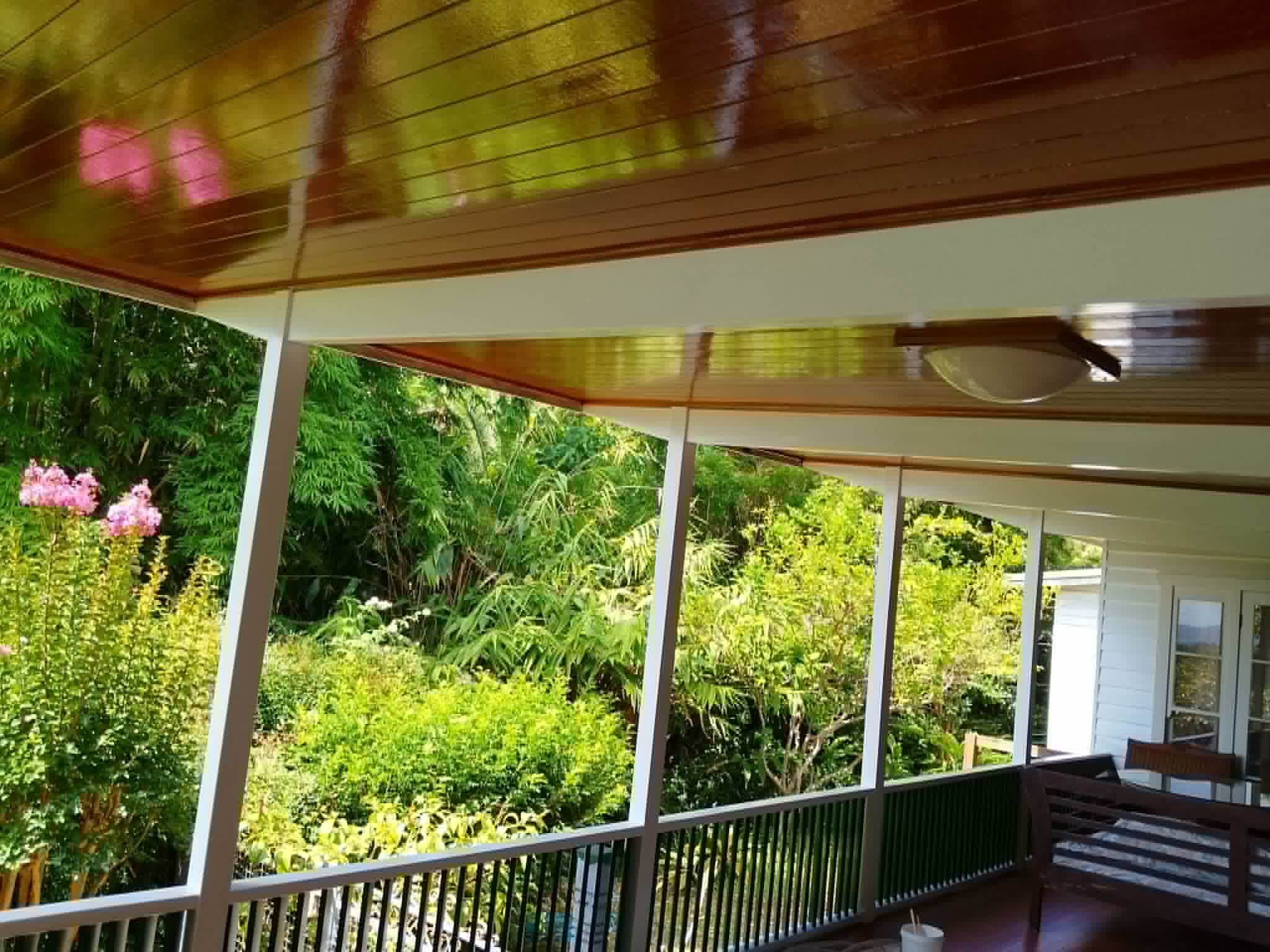
Expansive hardwood wrap decks and verandahs are central architectural features of Queenslander and coastal properties throughout Brunswick Heads, Byron Bay, and Tintenbar. However, horizontal timber surfaces bear the brunt of harsh weather: pounding rain, morning condensation, high humidity, and direct overhead sunlight.
Without consistent trade care, premium Australian hardwoods such as Merbau, Spotted Gum, and Blackbutt will turn grey, dry out, crack, and become prone to timber rot. Establishing an effective timber maintenance schedule protects your investment.
Why Subtropical Humidity Attacks Decking Timber
Timber is an organic, hygroscopic material that expands as it absorbs atmospheric moisture and shrinks as it dries under the sun. In the Northern Rivers, rapid shifts between intense downpours and hot sunshine cause repeated swelling and shrinking cycles across exposed deck boards.
This movement causes:
- Surface Checking: Microscopic hair-line cracks opening along the wood grain.
- Cupping and Warping: Board edges curling upward as moisture evaporates faster from the top surface than the underside.
- Tannin Bleed and Mould: Natural wood tannins migrating to the surface, creating dark stains and feeding fungal spores.
Oil-Based vs Water-Based Deck Coatings
Selecting the correct coating system depends on deck exposure and maintenance preferences:
Penetrating Decking Oils
Traditional penetrating natural oils sink deep into the timber cellular matrix, repelling water from within while allowing the wood grain to remain tactile and visible. They do not form a hard film on the surface, meaning they never peel, blister, or flake. Maintenance simply involves a chemical wash and a fresh coat of oil every twelve to eighteen months without the need for intensive sanding.
Water-Based Acrylic Stains
Modern water-based hybrid coatings cure to form a tough, flexible protective barrier over the timber surface. They offer superior UV blocking and longer initial colour retention than natural oils, often lasting eighteen to twenty-four months in exposed positions. However, when they eventually break down, full mechanical sanding is required before re-coating.
The Professional Deck Restoration Process
When restoring an aged, weathered timber deck back to sound hardwood, professional painters follow a disciplined sequence:
- Board Fastening and Punching: Protruding screws or dome-head nails are countersunk below the board surface to prevent hazards and allow smooth sanding.
- Mechanical Sanding: Heavy-grit drum and orbital sanders remove the dead, grey surface fibres and level out cupped boards, exposing fresh hardwood grain.
- Oxalic Acid Tannin Wash: An oxalic acid cleaning solution is applied to neutralize dark tannin stains, open the wood pores, and brighten the timber tone.
- Multi-Coat Oil Application: Two to three generous coats of premium decking oil are applied along the full length of each board with a lambswool applicator, back-brushing to ensure complete saturation.
With proper seasonal care, your hardwood deck will remain a clean, durable outdoor entertaining area for decades to come.