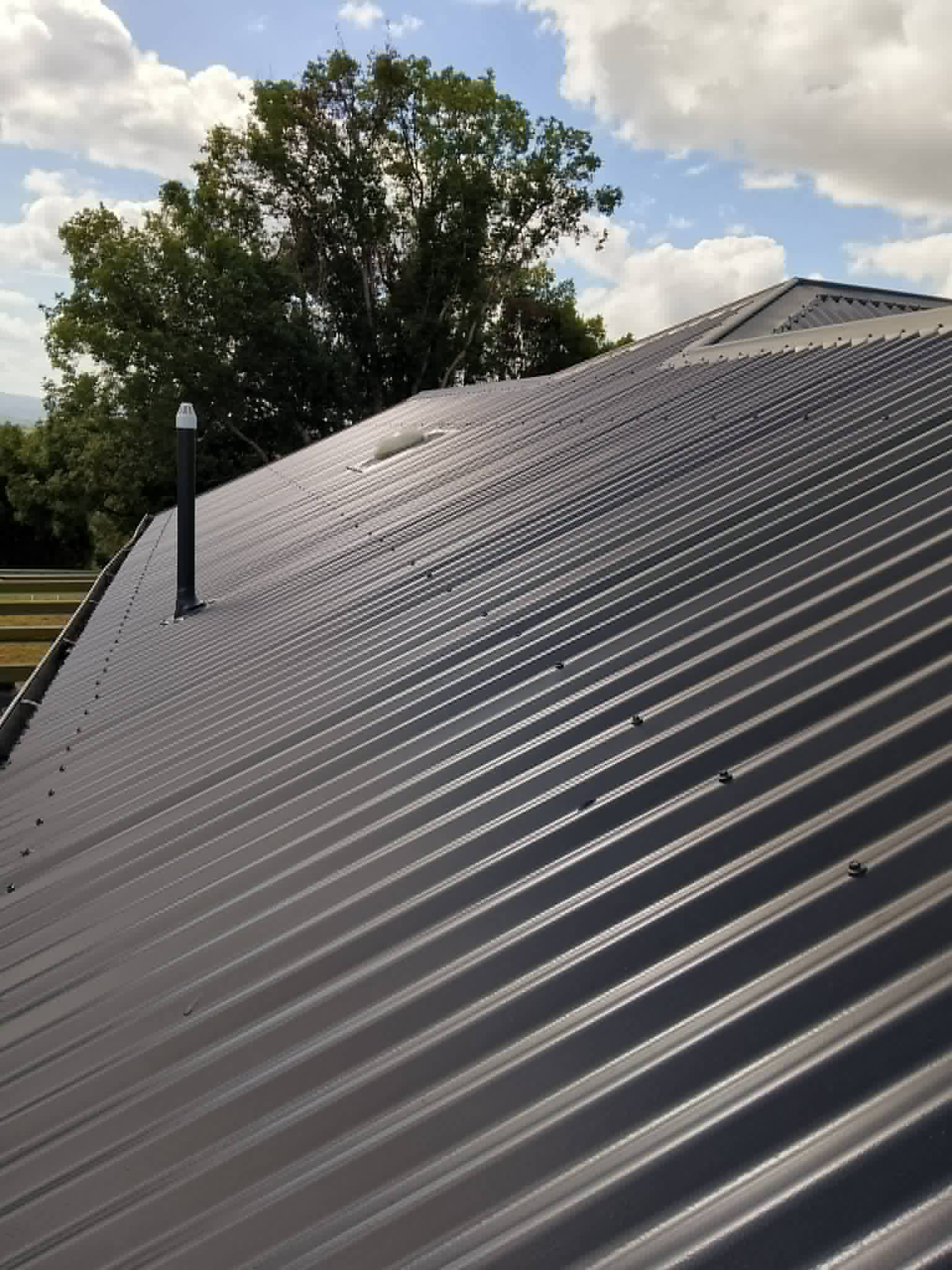
A home roof endures more severe environmental exposure than any other building element. In Northern NSW, roofs absorb intense solar radiation, heavy monsoonal rain, and persistent dampness that encourages lichen and moss colonies.
Over time, unmaintained concrete tiles become porous, mortar bedding cracks, and metal roof sheets develop oxidation and rust around screw penetrations. Complete roof restoration with heat-reflective membrane coatings restores weather protection while lowering household cooling costs.
How Solar Reflective Roof Membranes Work
Traditional dark-coloured roofs absorb up to ninety percent of incoming solar radiation, heating roof cavity temperatures to over sixty degrees Celsius on typical summer afternoons. This thermal energy radiates downward into ceiling insulation and living areas below, forcing air conditioning systems to work harder.
Heat-reflective roof membranes incorporate microscopic ceramic and polymeric pigments designed to reflect infrared radiation across the invisible spectrum.
Standard Roof: Absorbs 85% to 90% Solar Heat -> Cavity Temp 60C+ -> Heavy AC Load
Thermal Membrane: Reflects up to 85% Solar Radiation -> Cavity Temp Reduced by 15C to 20C -> Lower Cooling Bills
By reflecting infrared rays away before they transfer into the roof substrate, these advanced coatings keep roof surface temperatures significantly cooler, easing the heat load on interior rooms and extending the structural life of roof materials.
The Key Stages of Roof Restoration
A long-lasting roof restoration relies on thorough structural and surface preparation before any topcoat is sprayed:
1. High-Pressure Rotary Washing
The entire roof surface is cleaned with high-pressure rotary water spinners operating at three thousand to four thousand PSI. This strips away embedded lichen root systems, dirt, moss, and loose, chalked coating.
2. Structural Repairs and Flexible Re-Pointing
On tile roofs, all broken or chipped tiles are replaced with matching profiles. Old, crumbly sand-cement mortar along ridge caps, hips, and gables is removed and replaced with modern flexible acrylic pointing compound that moves naturally with building settlement without cracking. On metal roofs, loose fixings are replaced and rust converter is applied to flashings.
3. Master Primer and High-Build Topcoats
An initial high-adhesion binding primer is applied to seal porous tile substrates or passivate metal surfaces. This is followed by two heavy airless spray coats of 100 percent elastomeric acrylic roof membrane, achieving a high dry-film thickness that repels driving rain and withstands coastal UV exposure.
Restoring your roof before severe degradation sets in prevents expensive water leaks and makes the whole property look considerably better.