
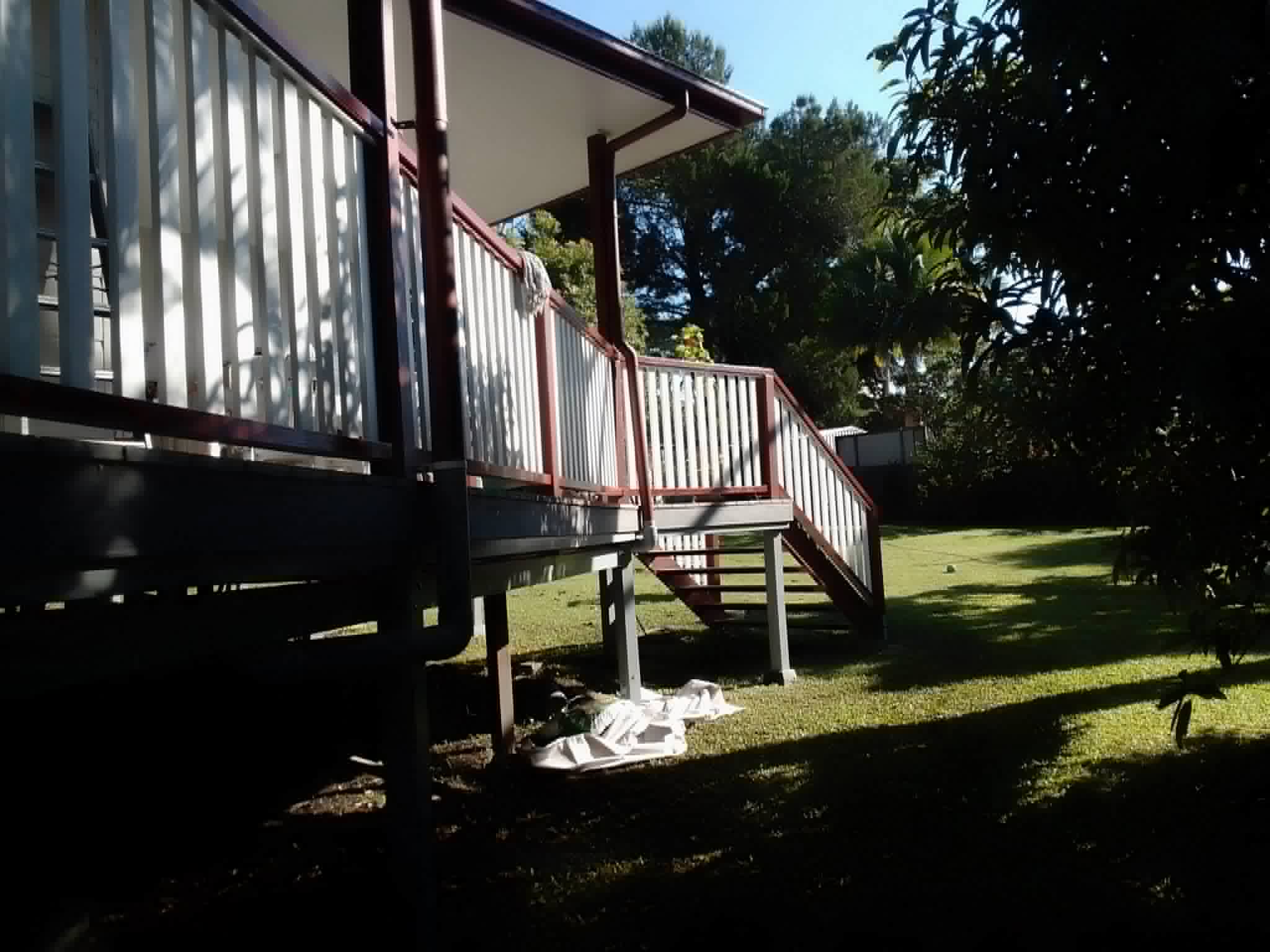
Black mould (Cladosporium and Aspergillus species) is a persistent issue for property owners throughout the Northern Rivers. Shaded weatherboard walls, southern eaves, and wrap decks in high-humidity valleys like Wilsons Creek and Mullumbimby often turn black within months of wet weather.
A common homeowner mistake is washing exterior mould with standard household bleach (sodium hypochlorite) and immediately painting over it. Within six months, the black spots inevitably return. Understanding the biological structure of mould explains why conventional bleaching fails and why targeted biocidal treatments are essential.
Why Household Bleach Does Not Kill Deep Mould Spores
Household bleach is an effective surface steriliser and colour lightener, but it possesses a high surface tension that prevents it from penetrating porous materials like timber, aged paint films, and cement render.
Bleach on Porous Substrate:
- Bleaches surface melanin (instant visual clean)
- Water carrier penetrates timber (fuels dormant root spores)
- Active chlorine evaporates on surface (zero residual kill)
- Result: Deep mould mycelium thrives on the newly introduced moisture
When bleach is applied to weatherboards, the chlorine rapidly evaporates off the surface, while the water component sinks deep into the wood grain. This moisture actually feeds the microscopic fungal root structures (hyphae) left behind in the timber pores. Within weeks, the mould colony regenerates and breaks through the fresh paint film.
How Trade-Grade Biocides Work
Professional painting contractors use broad-spectrum quaternary ammonium compounds and specialised alkyl dimethyl benzyl ammonium chlorides. These professional biocides work through targeted chemical mechanisms:
- Low Surface Tension: The solution penetrates deep into microscopic fissures, timber grain, and end-grain joints where mould hyphae reside.
- Cellular Membrane Disruption: Biocides rupture the cellular walls of mould spores, lichen, and algae, rendering them biologically inactive.
- Residual Antimicrobial Barrier: Unlike bleach, biocides bond with the timber substrate and provide lingering fungicidal protection that prevents new airborne spores from colonising the surface for extended periods.
Professional Treatment and Repainting Workflow
Eradicating mould permanently requires a disciplined three-step preparation sequence:
- Biocidal Application and Dwell Time: The biocide solution is applied using low-pressure spray equipment across dry walls and allowed to dwell for thirty to sixty minutes so the chemical can penetrate active spore networks.
- Controlled Pressure Rinsing: The dead fungal material is rinsed away using medium-pressure washing and soft-bristle scrub brushes, taking care not to gouge softened timber.
- Fungicidal Primer Application: Once the substrate dries thoroughly, an oil-based or high-adhesion acrylic primer infused with active fungicides is applied to lock down the timber fibres before applying premium exterior acrylic topcoats.
This systematic process breaks the mould cycle, keeping weatherboard cottages and wrap verandahs clean and protected through Northern Rivers wet seasons.