Living along the Northern Rivers coastline offers remarkable lifestyle benefits, but the local environment presents severe challenges for exterior paintwork. Homes across Brunswick Heads, Byron Bay, and Lennox Head are subject to a destructive combination of airborne sea salt, elevated humidity, and intense ultraviolet radiation.
Understanding how these environmental forces interact with paint films helps property owners identify early warning signs of coating breakdown before moisture causes costly timber rot or render damage.
The Chemistry of Salt Deposition on Exterior Walls
When onshore ocean winds blow inland, they carry microscopic aerosolised salt particles. These salt crystals deposit across weatherboards, window frames, eaves, and metal fasteners.
Salt is hygroscopic, meaning it continuously pulls moisture directly out of the ambient air. Even on dry, sunny mornings following humid coastal nights, the salt crystals sitting on your exterior walls dissolve into a thin, highly corrosive brine. This brine accelerates the oxidisation of paint binders and causes metal fixings to rust beneath the paint film.
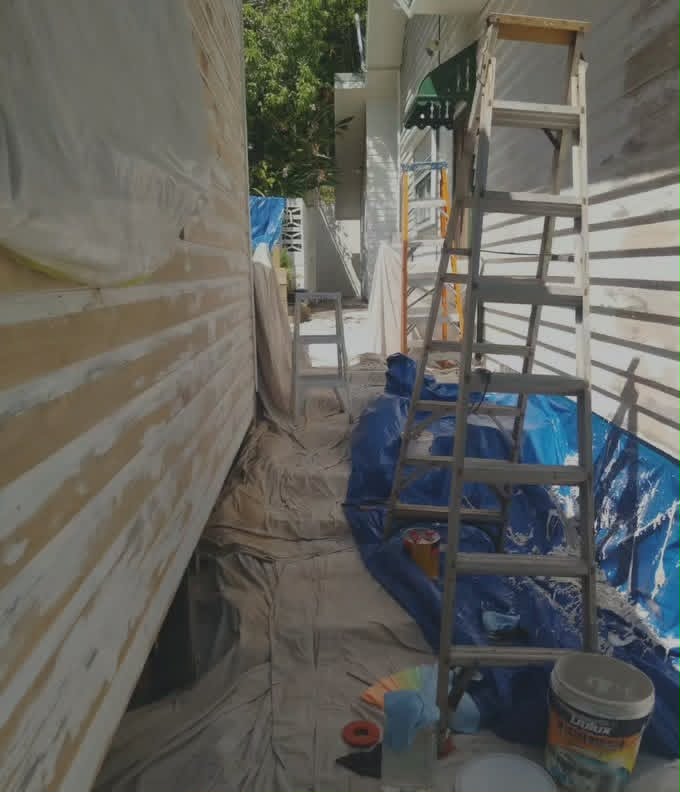
Onshore Winds -> Salt Particle Deposition -> Moisture Absorption -> Binder Breakdown -> Paint BlisteringIf paint is applied over surfaces that have not been thoroughly pressure washed to remove embedded salt, the salt remains trapped under the new coating. As temperatures rise, the salt draws moisture through the breathable acrylic film, causing blistering, bubbling, and premature adhesion failure within twelve to twenty-four months.
High Humidity and Microscopic Mould Spores
The Northern Rivers experiences prolonged stretches of relative humidity exceeding eighty percent, particularly between November and April. This sustained moisture prevents exterior walls in shaded gullies or southern aspects from drying out completely.
Standard exterior acrylics without active fungicidal additives become prime breeding grounds for airborne mould spores. Black mould and green algae feed on microscopic organic debris and the acrylic polymer resin itself, discolouring the facade and weakening the paint membrane.
Essential Maintenance Practices for Coastal Properties
To maximise the lifespan of your exterior paintwork along the coastal strip, implement these practical maintenance steps:
- Annual Fresh Water Washdowns: Rinse exterior walls, eaves, and verandah railings with a low-pressure garden hose or gentle pressure wash once or twice each year to dissolve surface salt crusts.
- Inspect Southern and Shaded Facades: Check damp areas regularly for early mould spotting. Treat light patches immediately with a mild biocide solution rather than standard household bleach.
- Seal Gaps and Exposed Timber End Grain: Inspect weatherboard butt joints, window corner mitres, and verandah post bases every spring. Fill hairline cracks with flexible exterior polyurethane sealants before winter rain penetrates.
- Choose High-Build Coastal Acrylics: When repainting, insist on premium 100 percent acrylic exterior paints formulated with built-in UV blockers and mould inhibitors, such as Dulux Weathershield or Taubmans Endure.
Taking a proactive approach to salt removal and moisture management ensures your home stays protected, preserving both its structural integrity and street appeal.